Top.Mail.Ru

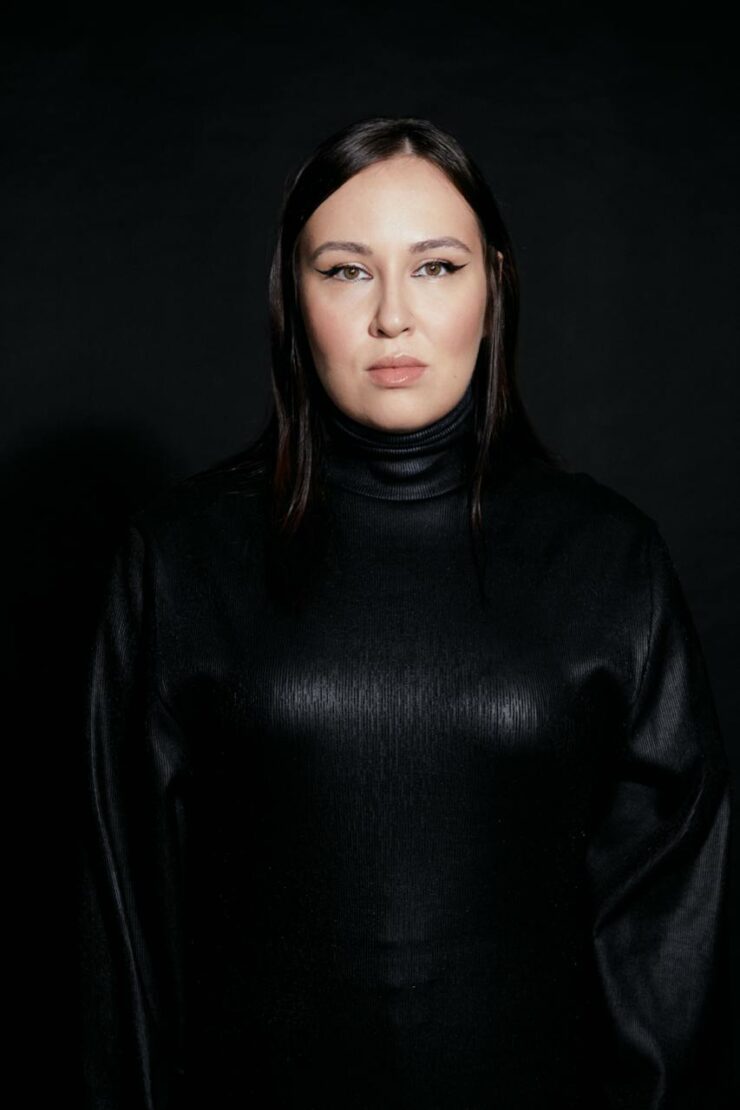
Tatyana Bikmukhametova

Soprano

Tatiana Bikmukhametova was born in the city of Satka in the Southern Urals. She graduated from the vocal department of the Academic Music College at the Tchaikovsky Moscow State Conservatory and the Russian Institute of Theatre Arts GITIS (the class of Professor Tamara Sinyavskaya). She is a scholarship holder of the Magnezit Group Foundation and the Muslim Magomayev Foundation. Tatiana’s repertoire includes chamber music by modern composers, vocal compositions by classics of the 20th century, sacred music of the Middle Ages, as well as opera parts.


In December 2022, she performed the role of the First Sibyl in Carl Orff’s opera De temporum fine comoedia with the musicAeterna Orchestra and Choir conducted by Teodor Currentzis at the Diaghilev+ satellite festival in Perm. In 2023, she passed the competitive selection for the final audition stage for the troupe of the Opéra Bastille (Paris). 


Tatiana participated in the First All-Russian Orchestra School of Contemporary Music MolOt and the Gnesin Contemporary Music Week as a performer of music of the 20th and 21st centuries. Since January 2023, she has been performing as part of the Île Thélème Ensemble under the direction of Natalia Sokolovskaya. As a guest artist of musicAeterna, she has participated in chamber concerts, including the premiere of Andreas Moustoukis’s vocal and instrumental cycle Hymnen an die Nacht.
In the 2024/2025 season, she became a soloist of the Astrakhan Opera and Ballet Theatre troupe, where she made her debut in the title role of Tchaikovsky’s opera Iolanta. During the season, she also prepared and performed the roles of Mimi in Puccini’s La Boheme, Yaroslavna in Borodin’s Prince Igor, Belinda in Purcell’s Dido and Aeneas, and others. 


WHY DID YOU DECIDE TO BECOME A MUSICIAN?
I was born in the Southern Urals, in the small town of Satka based around the metallurgical industry. The cultural environment of the district was mainly made up of pop and folk groups, but I always intuitively wanted to sing opera. I am grateful to the teachers at my music school — even then, in the mixed choir, they heard that I had a very loud, big voice and supported my desire to pursue academic music. I was six years old at the time.
HOW HAVE YOU BECOME A MEMBER OF MUSICAETERNA?
When musicAeterna was casting at Diaghilev+ for Karl Orff's De temporum fine comoedia, I almost accidentally received a newsletter. At night, in the dormitory of the theatre institute, I opened the email with trembling hands, 'What is it there, what kind of music is there?' And there was big sound, big voices, a complex orchestra, and an unusual score in ancient Greek... The deadline was only three days away, but it was my lucky chance, as if my whole life had been leading me to this moment. I immediately selected the most difficult fragments, learned them, recorded them, and sent them to apply. Then I came to a casting in Saint Petersburg. I applied for the musicAeterna Educational Programme several times, but ended up getting straight to the performance as an artist, in the role of the First Sibyl.
HOW DO YOU RECOVER FROM HARD WORK?
My favourite way of recovery is silence, and walking in the woods. I listen to music all the time, and even if I'm not singing, I'm following it mentally and physically. And the state when you sing is always like 'on tiptoe', there is tension in the body. That' is why sometimes you want to listen to something simple — the rustle of leaves, the sounds of water and wind. To relieve hearing, to ground yourself. When you relax, gain impressions, see your loved ones, walk with your dog — you are filled with life, and there comes a desire to sing.
WHAT DOES MUSIC MEAN TO YOU?
My first teacher explained to me that a voice is not a property, but a gift. She also taught me how to talk to the stage and pray before performing. Contact with the divine and singing are very close things for me. It is a very pure process, something subtle and fragile. I think if you are pure of heart, honest with the world and other people, then you have the right to sing.
WHICH OPERA ROLE WOULD YOU LIKE TO PERFORM?
I don't dream of a specific role — it's more interesting for me to try different things. For example, to perform a role for a mezzo-soprano or for an experimental soprano with a very wide range. I like modern academic music where the boundaries are blurred. It would be great to revive the days when composers had their 'own' singers, for whom music was created. I would like to collaborate more with composers, bring them my natural gift and my skills, and compose together. I like to do things that no one else has done before me.
WHAT IS YOUR DREAM?
I think my profession is the happiest of all. I am happy to be where I am; I am happy and grateful for this place, for my fellow musicians, and for Teodor Currentzis — our mentor. When I think that singing is hard work, I always tell myself, 'But this is my favourite work!' It feels like that when you have just had a delicious meal and you know you still have dessert ahead. Going to practice is the 'dessert' for me. Being genuinely happy about what you are doing is the path to longevity, both musical and human.