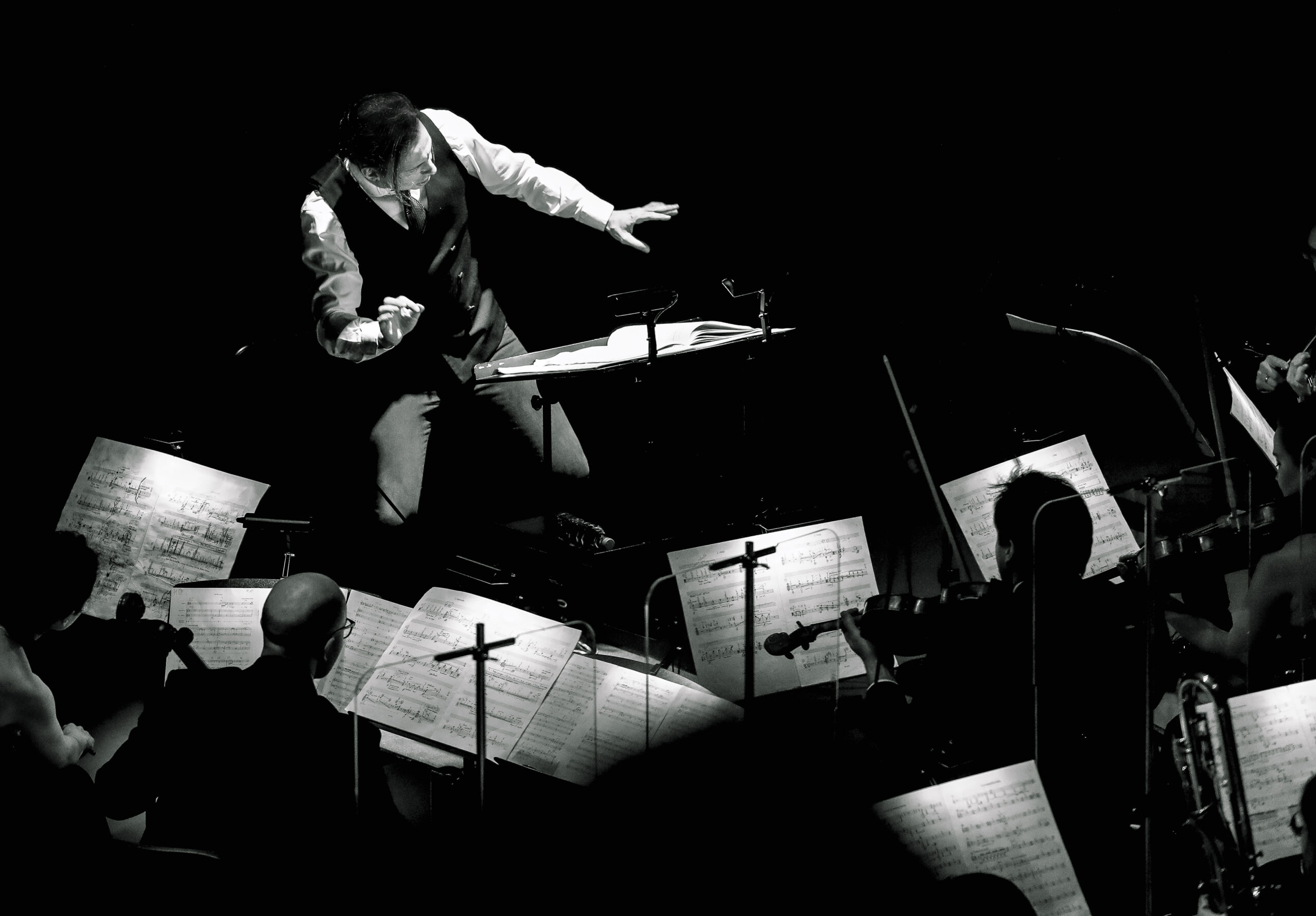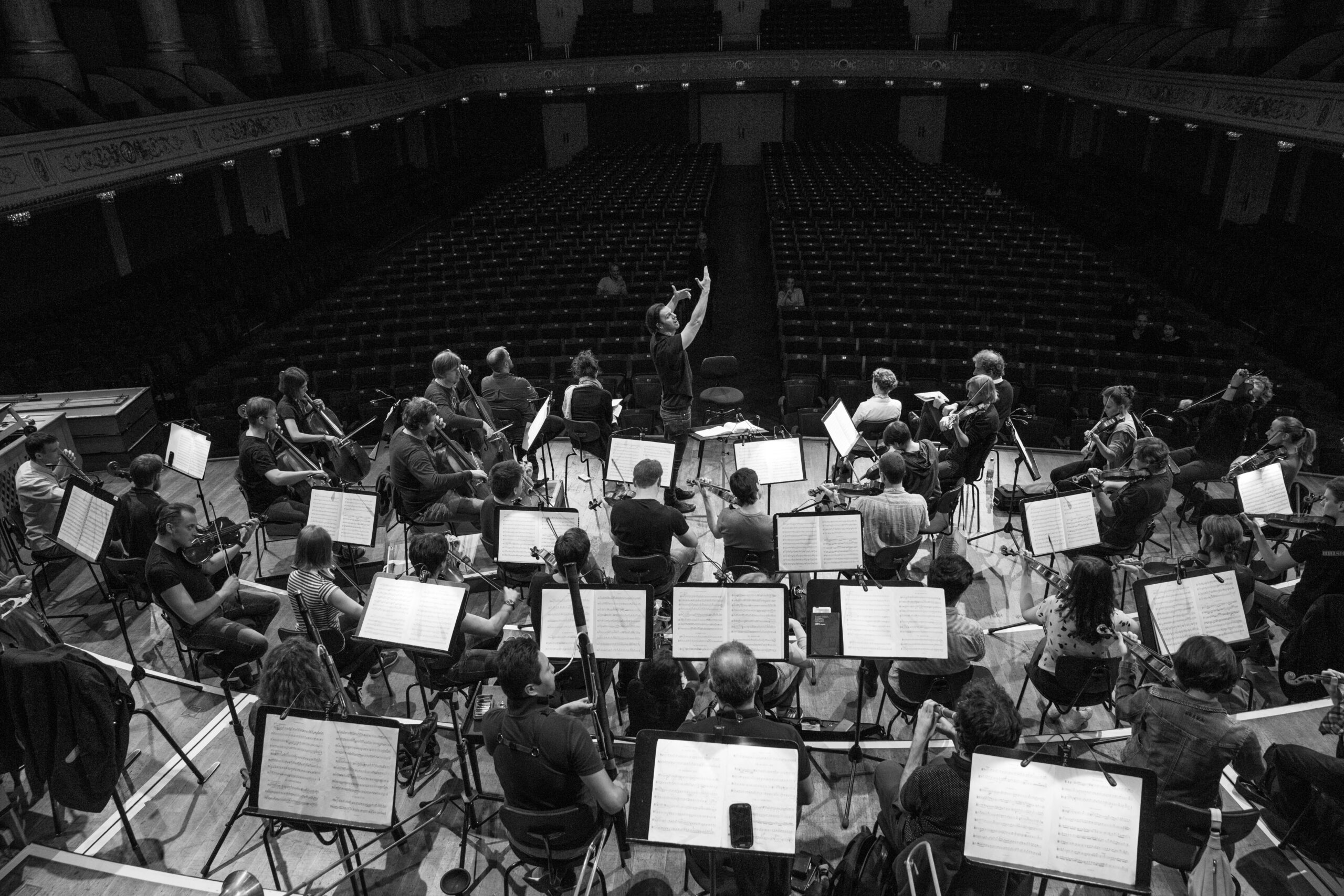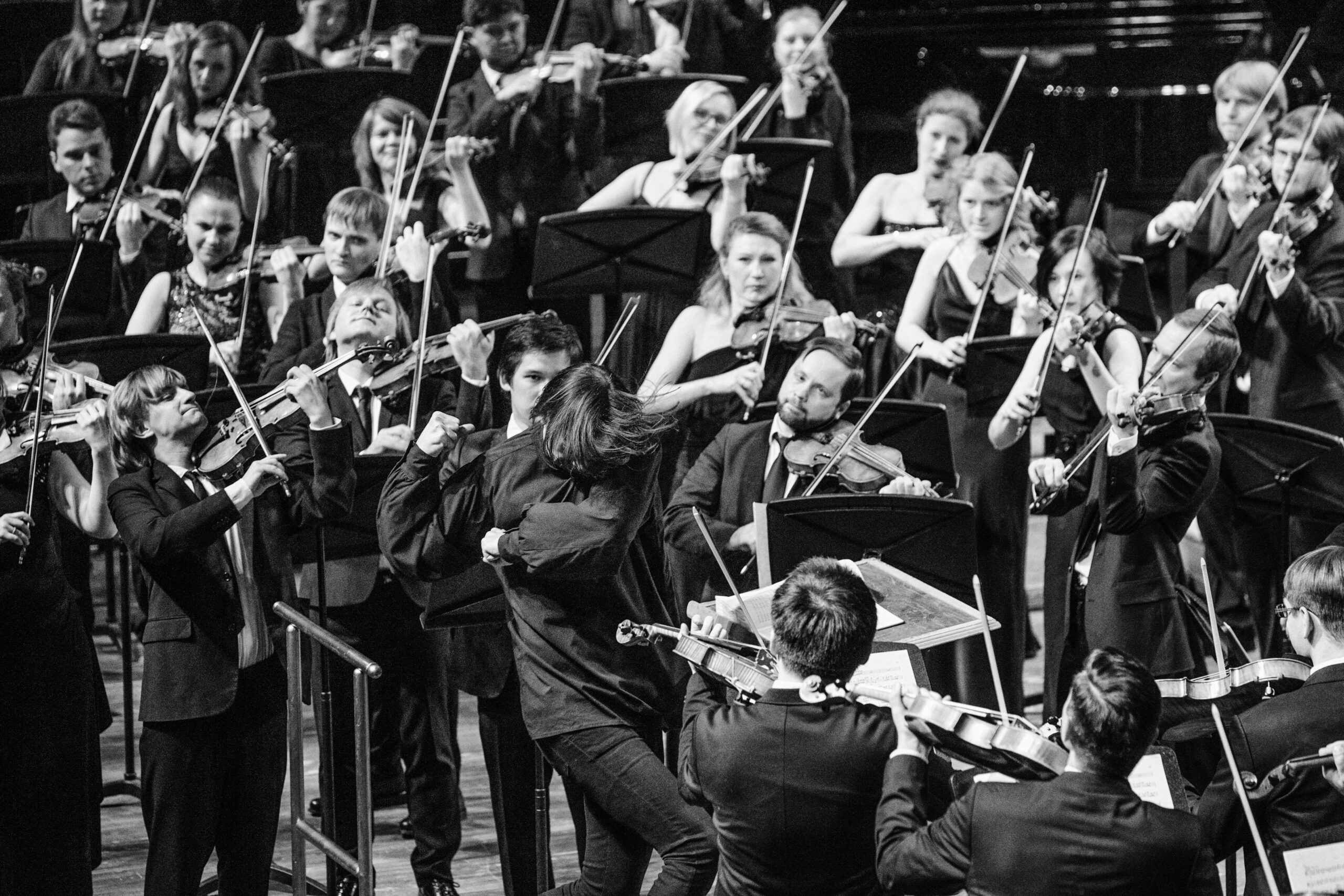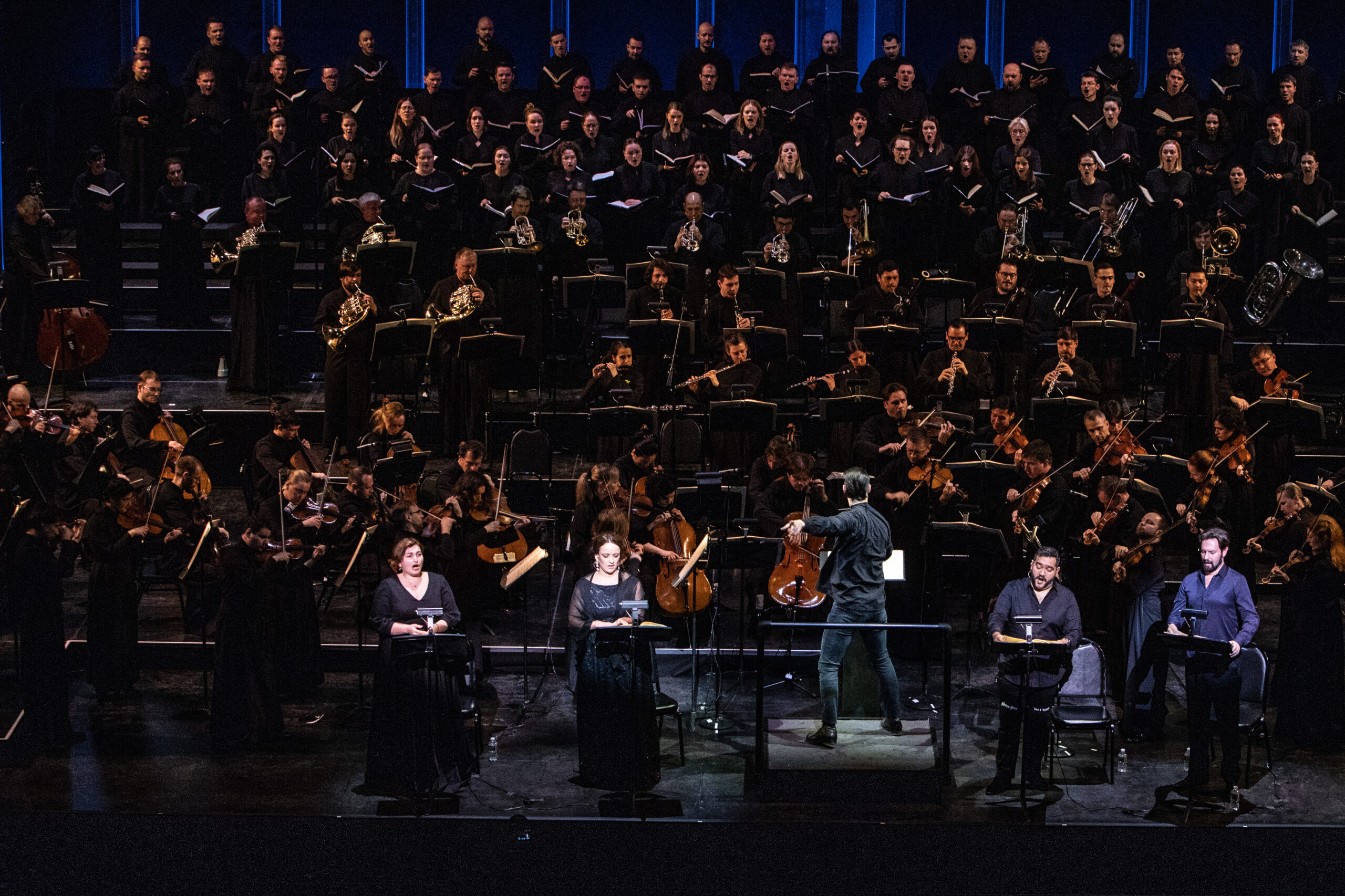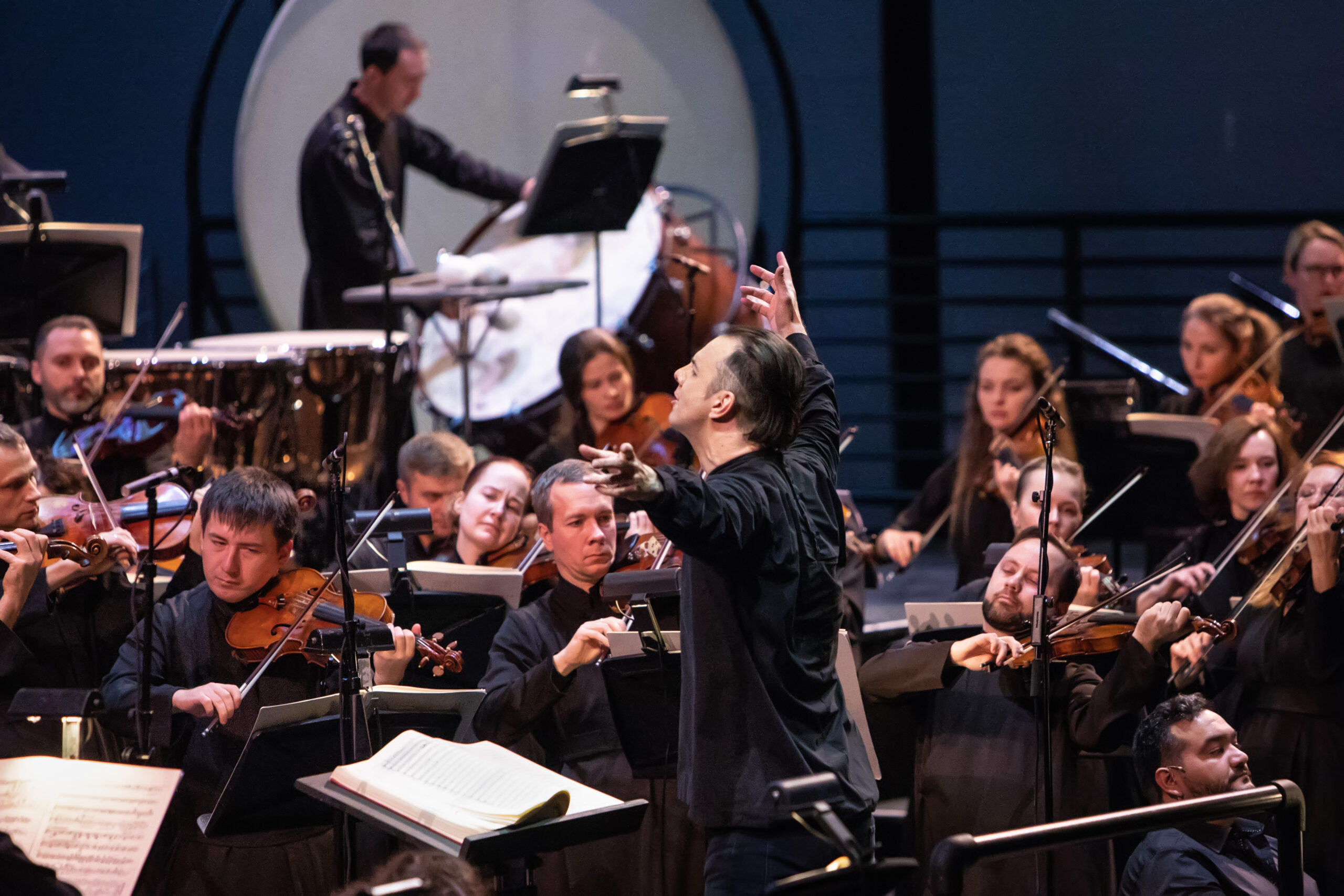
musicAeterna is one of the most in-demand Russian ensembles that is constantly pushing the boundaries of its creative capabilities in the field of historically informed performance of early music, academic music of the classical period, and contemporary compositions.
Together with Teodor Currentzis, musicAeterna regularly tours Europe and the world with performances in numerous prestigious venues.
The musicAeterna orchestra is a guest at international festivals, such as RUHRtriennale, Klara Festival, Aix-en-Provence festival, Lucerne festival, and Diaghilev festival. In 2017, musicAeterna became the first Russian ensemble to have the honor of opening the main programme of the world’s most prestigious music festival: the Salzburg festival.
Conducted by Teodor Currentzis, musicAeterna has recorded with Sony Classical the works by Mozart, Mahler, Beethoven, Tchaikovsky, Rameau, and Stravinsky. These recordings have received prestigious music awards: ECHO Klassik, Edison Klassiek, Japanese Record Academy Award, and BBC Music Magazine’s Opera Award.
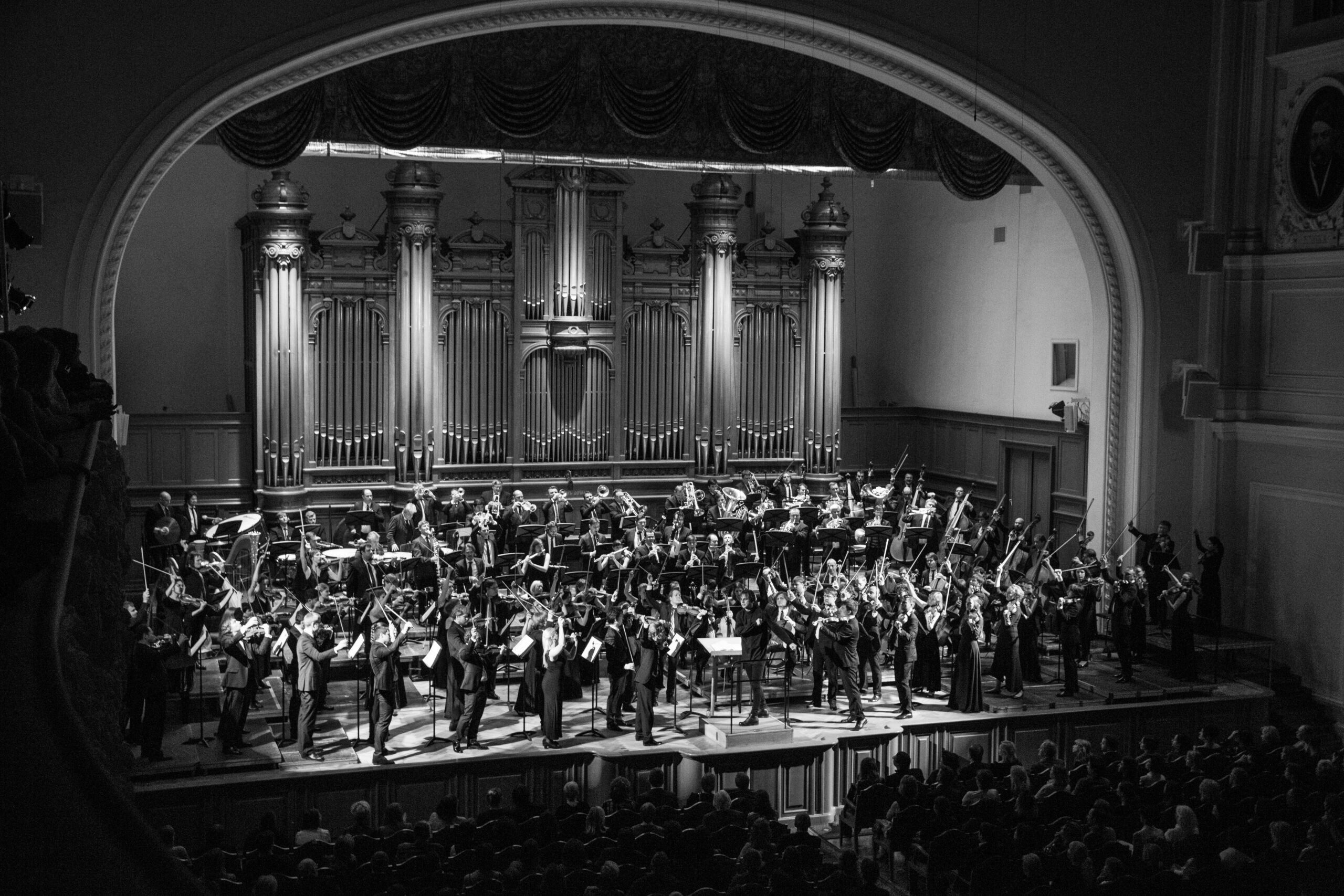
First Violins
Second Violins
Violаs
Cellos
Double Basses
Flutes
Oboes
Clarinets
Bassoons
Horns
Trumpets
Trombones
Tuba
Percussion
Harp
Keyboards
musicAeterna orchestra events
György Kurtág (b. 1926)
Songs of Despair and Sorrow for mixed choir with instrumental accompaniment, Op. 18 (1980–1994)
So weary, so wretched to the words of Mikhail Lermontov (1840)
Night, an empty street, a lamp, a drug-store to the words of Alexander Blok (1912)
Blue Evening to the words of Sergei Yesenin (1925)
Where can I go to in this January? to the words of Osip Mandelstam (1937)
The Crucifixion to the words of Anna Akhmatova (1939)
It’s time to the words of Marina Tsvetaeva (1941)
Grabstein für Stephan | Gravestone for Stephan for guitar and instrumental ensemble, Op. 15c
(1989)
Johannes Brahms (1833–1897)
Ein deutsches Requiem | A German Requiem for soprano, baritone, choir and orchestra, Op. 45 (1865–1869)
Selig sind, die da Leid tragen | Blessed are those who weep, for they will be comforted
Denn alles Fleisch, es ist wie Gras | For all flesh is like grass
Herr, lehre doch mich, dass ein Ende mit mir haben muss | Lord, teach me that I must have an end
Wie lieblich sind Deine Wohnungen, Herr Zebaoth! | How lovely is Thy dwelling place, O Lord of hosts!
Ihr habt nun Traurigkeit | Ye now therefore have sorrow
Denn wir haben hier keine bleibende Statt | For here we have no continuing city
Selig sind die Toten, die in dem Herrn sterben | Blessed are the dead who die in the Lord
The programme is subject to change.
Performers:
Iveta Simonyan — soprano
Vladislav Chizhov — baritone
The musicAeterna Choir and Orchestra
Conductor — Teodor Currentzis
György Kurtág (b. 1926)
Songs of Despair and Sorrow for mixed choir with instrumental accompaniment, Op. 18 (1980–1994)
So weary, so wretched to the words of Mikhail Lermontov (1840)
Night, an empty street, a lamp, a drug-store to the words of Alexander Blok (1912)
Blue Evening to the words of Sergei Yesenin (1925)
Where can I go to in this January? to the words of Osip Mandelstam (1937)
The Crucifixion to the words of Anna Akhmatova (1939)
It’s time to the words of Marina Tsvetaeva (1941)
Grabstein für Stephan | Gravestone for Stephan for guitar and instrumental ensemble, Op. 15c
(1989)
Johannes Brahms (1833–1897)
Ein deutsches Requiem | A German Requiem for soprano, baritone, choir and orchestra, Op. 45 (1865–1869)
Selig sind, die da Leid tragen | Blessed are those who weep, for they will be comforted
Denn alles Fleisch, es ist wie Gras | For all flesh is like grass
Herr, lehre doch mich, dass ein Ende mit mir haben muss | Lord, teach me that I must have an end
Wie lieblich sind Deine Wohnungen, Herr Zebaoth! | How lovely is Thy dwelling place, O Lord of hosts!
Ihr habt nun Traurigkeit | Ye now therefore have sorrow
Denn wir haben hier keine bleibende Statt | For here we have no continuing city
Selig sind die Toten, die in dem Herrn sterben | Blessed are the dead who die in the Lord
The programme is subject to change.
Performers:
Iveta Simonyan — soprano
Vladislav Chizhov — baritone
The musicAeterna Choir and Orchestra
Conductor — Teodor Currentzis
György Kurtág (b. 1926)
Songs of Despair and Sorrow for mixed choir with instrumental accompaniment, Op. 18 (1980–1994)
So weary, so wretched to the words of Mikhail Lermontov (1840)
Night, an empty street, a lamp, a drug-store to the words of Alexander Blok (1912)
Blue Evening to the words of Sergei Yesenin (1925)
Where can I go to in this January? to the words of Osip Mandelstam (1937)
The Crucifixion to the words of Anna Akhmatova (1939)
It’s time to the words of Marina Tsvetaeva (1941)
Grabstein für Stephan | Gravestone for Stephan for guitar and instrumental ensemble, Op. 15c
(1989)
Johannes Brahms (1833–1897)
Ein deutsches Requiem | A German Requiem for soprano, baritone, choir and orchestra, Op. 45 (1865–1869)
Selig sind, die da Leid tragen | Blessed are those who weep, for they will be comforted
Denn alles Fleisch, es ist wie Gras | For all flesh is like grass
Herr, lehre doch mich, dass ein Ende mit mir haben muss | Lord, teach me that I must have an end
Wie lieblich sind Deine Wohnungen, Herr Zebaoth! | How lovely is Thy dwelling place, O Lord of hosts!
Ihr habt nun Traurigkeit | Ye now therefore have sorrow
Denn wir haben hier keine bleibende Statt | For here we have no continuing city
Selig sind die Toten, die in dem Herrn sterben | Blessed are the dead who die in the Lord
The programme is subject to change.
Performers:
Iveta Simonyan — soprano
Vladislav Chizhov — baritone
The musicAeterna Choir and Orchestra
Conductor — Teodor Currentzis
Jean-Philippe Rameau (1683–1764)
Vocal and orchestral numbers from the works:
Les Indes galantes (1735), an opera-ballet
Castor et Pollux (1737), a lyrical tragedy
Les fêtes d’Hébé, ou Les talens lyriques (1739), an opera-ballet
Platée ou Junon jalouse (1745), a lyrical comedy
Zaïs (1748), a heroic pastoral
Zoroastre (1749), a lyrical tragedy
Abaris ou les Boréades (1763–1764), a lyrical tragedy
The programme is subject to change.
Performers:
The musicAeterna Orchestra and Choir
Artists of the Anton Rubinstein Academy
Musical Director and Conductor – Teodor Currentzis
Jean-Philippe Rameau (1683–1764)
Vocal and orchestral numbers from the works:
Les Indes galantes (1735), an opera-ballet
Castor et Pollux (1737), a lyrical tragedy
Les fêtes d’Hébé, ou Les talens lyriques (1739), an opera-ballet
Platée ou Junon jalouse (1745), a lyrical comedy
Zaïs (1748), a heroic pastoral
Zoroastre (1749), a lyrical tragedy
Abaris ou les Boréades (1763–1764), a lyrical tragedy
The programme is subject to change.
Performers:
The musicAeterna Orchestra and Choir
Artists of the Anton Rubinstein Academy
Musical Director and Conductor – Teodor Currentzis
Jean-Philippe Rameau (1683–1764)
Vocal and orchestral numbers from the works:
Les Indes galantes (1735), an opera-ballet
Castor et Pollux (1737), a lyrical tragedy
Les fêtes d’Hébé, ou Les talens lyriques (1739), an opera-ballet
Platée ou Junon jalouse (1745), a lyrical comedy
Zaïs (1748), a heroic pastoral
Zoroastre (1749), a lyrical tragedy
Abaris ou les Boréades (1763–1764), a lyrical tragedy
The programme is subject to change.
Performers:
The musicAeterna Orchestra and Choir
Artists of the Anton Rubinstein Academy
Musical Director and Conductor – Teodor Currentzis