
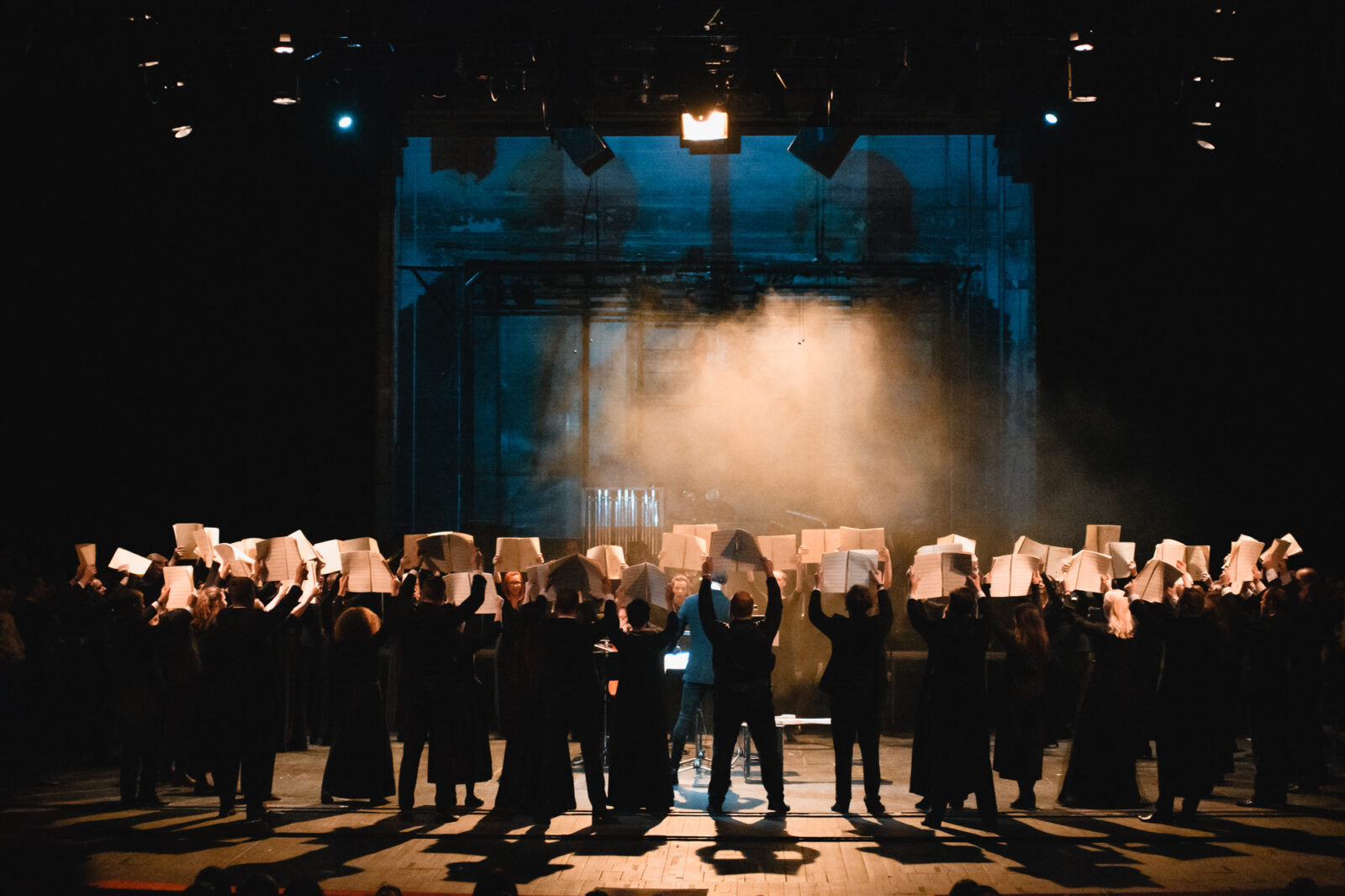
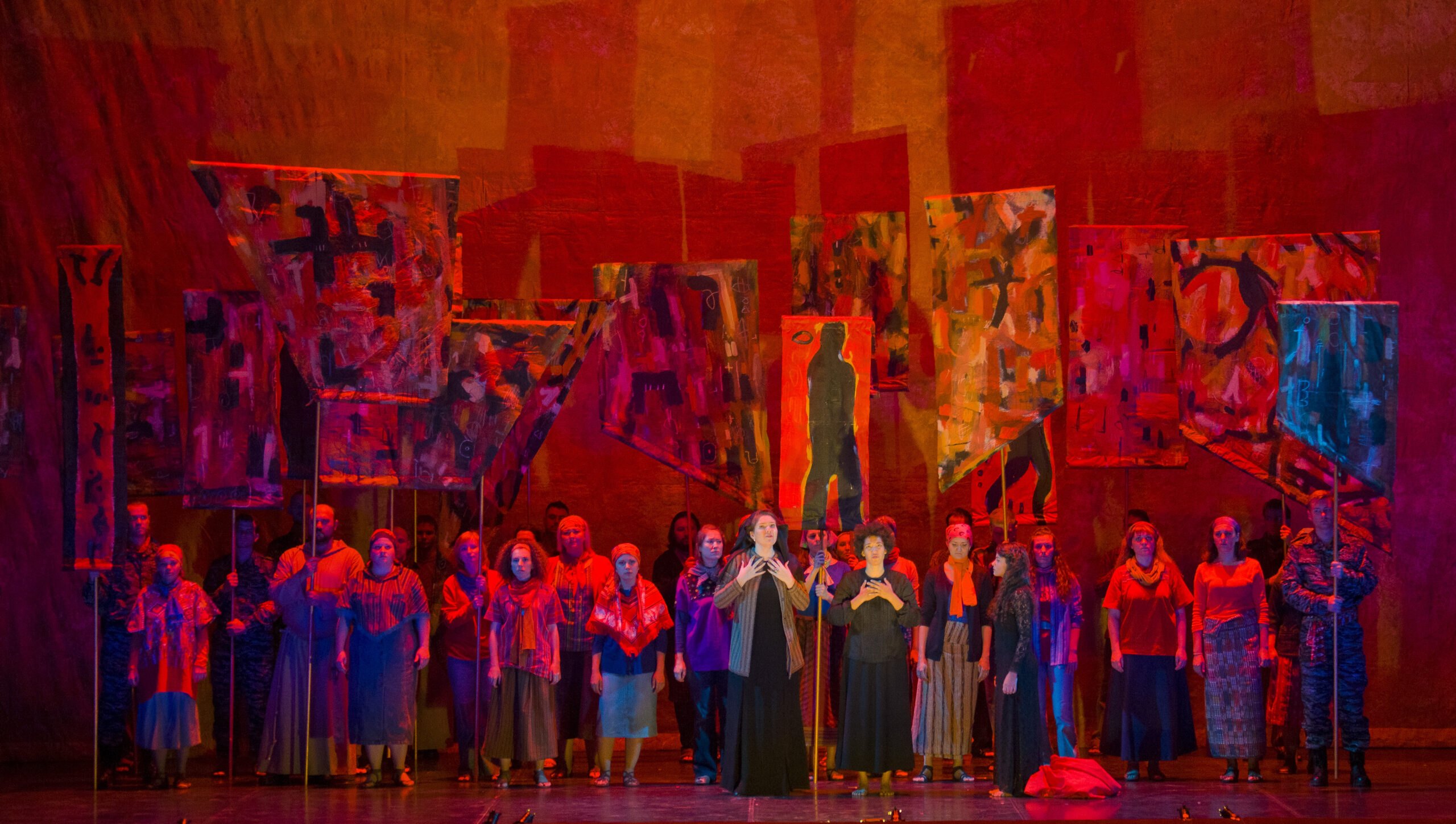
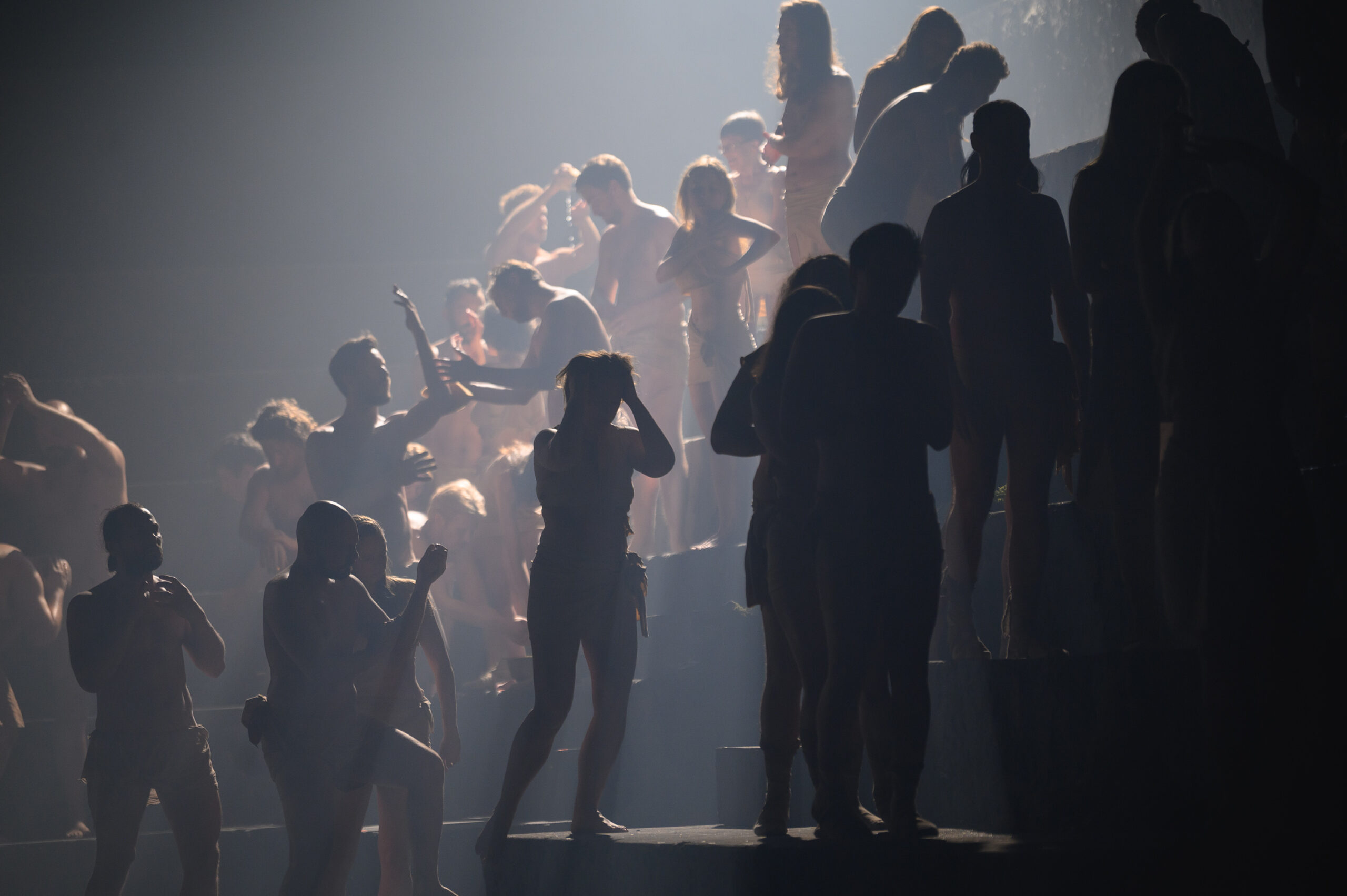
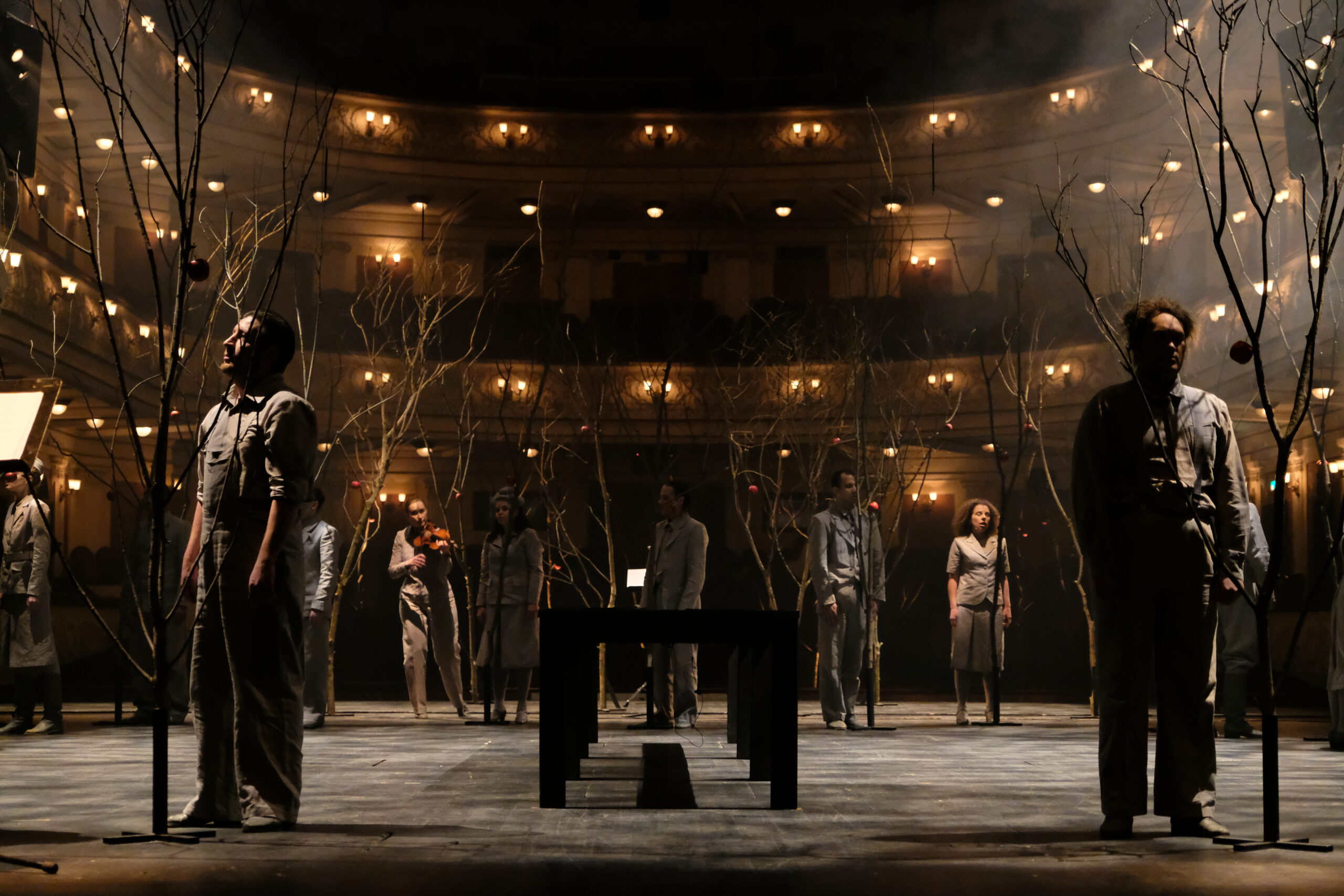
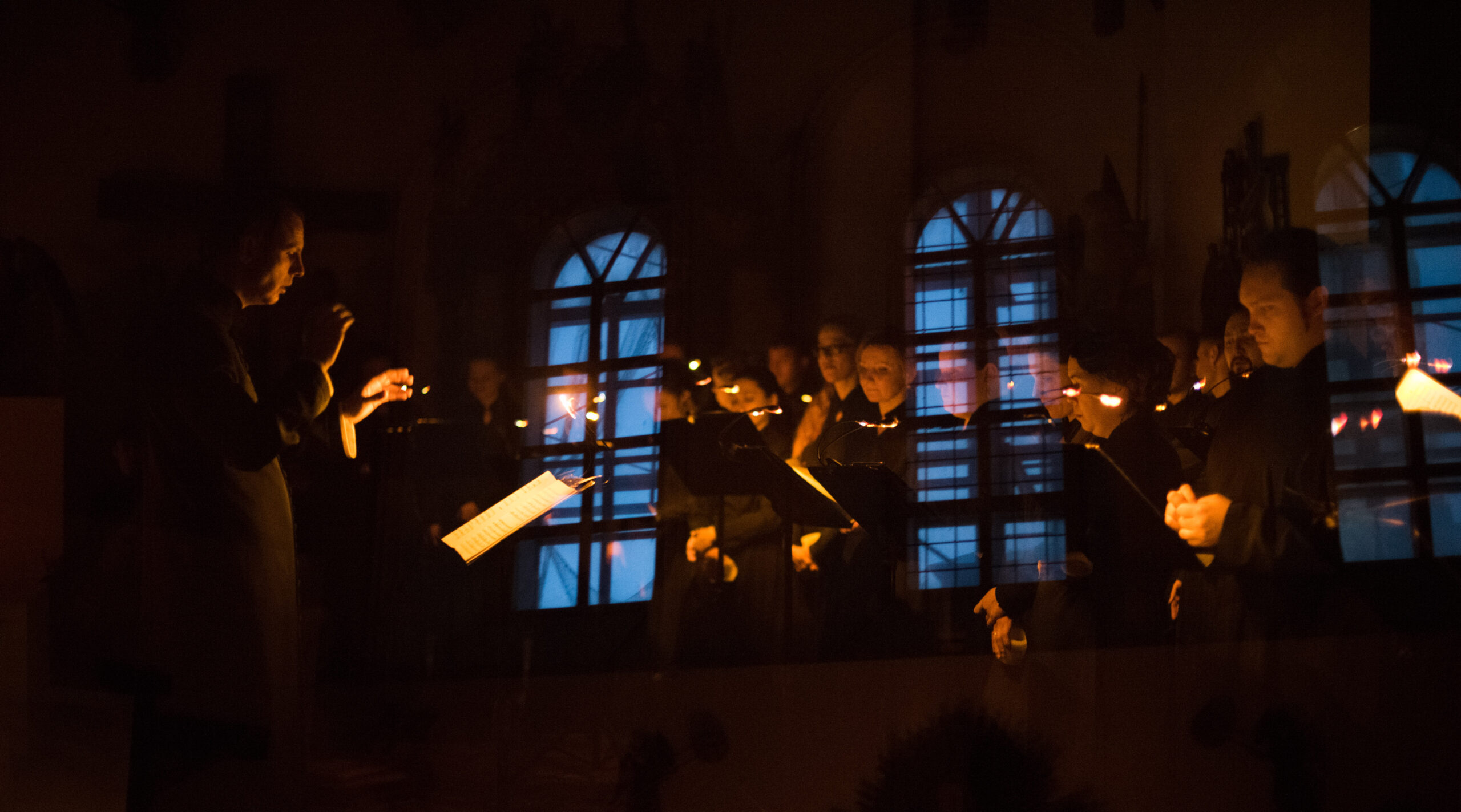
The musicAeterna choir was founded by Teodor Currentzis in 2004 in Novosibirsk. From 2011 to 2019, the collective was part of the Perm Opera and Ballet Theatre troupe. In 2018, the choir became a laureate of the Opera Awards.
The repertoire of the musicAeterna Choir includes Russian and Western European medieval music, the Baroque era masterpieces, classical choral and opera repertoire, as well as compositions by modern authors.
The choir has collaborated with such conductors as René Jacobs, Vincent Dumestre, Andres Mustonen, Paul Hillier, Raphaël Pichon, Andrea Marcon, Dmitry Sinkovsky, and many others, as well as Le Poème Harmonique early music ensemble.
Together with Teodor Currentzis the musicAeterna Choir regularly tours Russia and Europe, participates in such international festivals as the Ruhrtriennale, the Klarafestival in Brussels, the Festival d’Aix-en-Provence, the “Diaghilev P.S.” festival in St Petersburg, and the Diaghilev Festival in Perm. In 2017, musicAeterna became the first Russian music collective to open the main programme of the Salzburg Festival, and have since become regular participant of the festival.
Released by musicAeterna and Teodor Currentzis on the Sony Classical label, recordings of Mozart, Purcell, Rameau, and Stravinsky have been awarded prestigious awards: ECHO KLASSIK, Edison Klassiek, awards from Opernwelt and BBC Music Magazine, the German Record Critics' Award, and the Japan Record Awards.
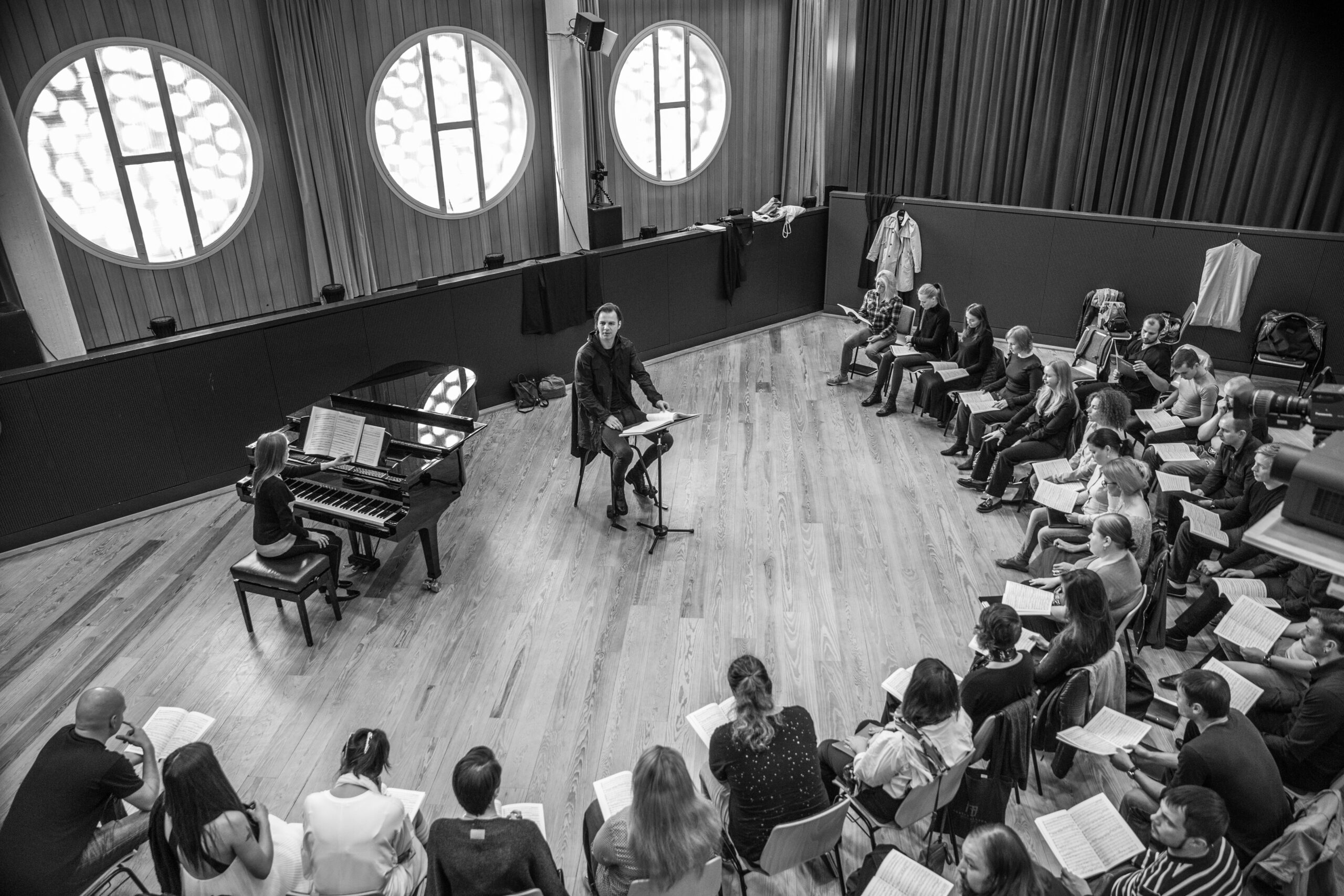
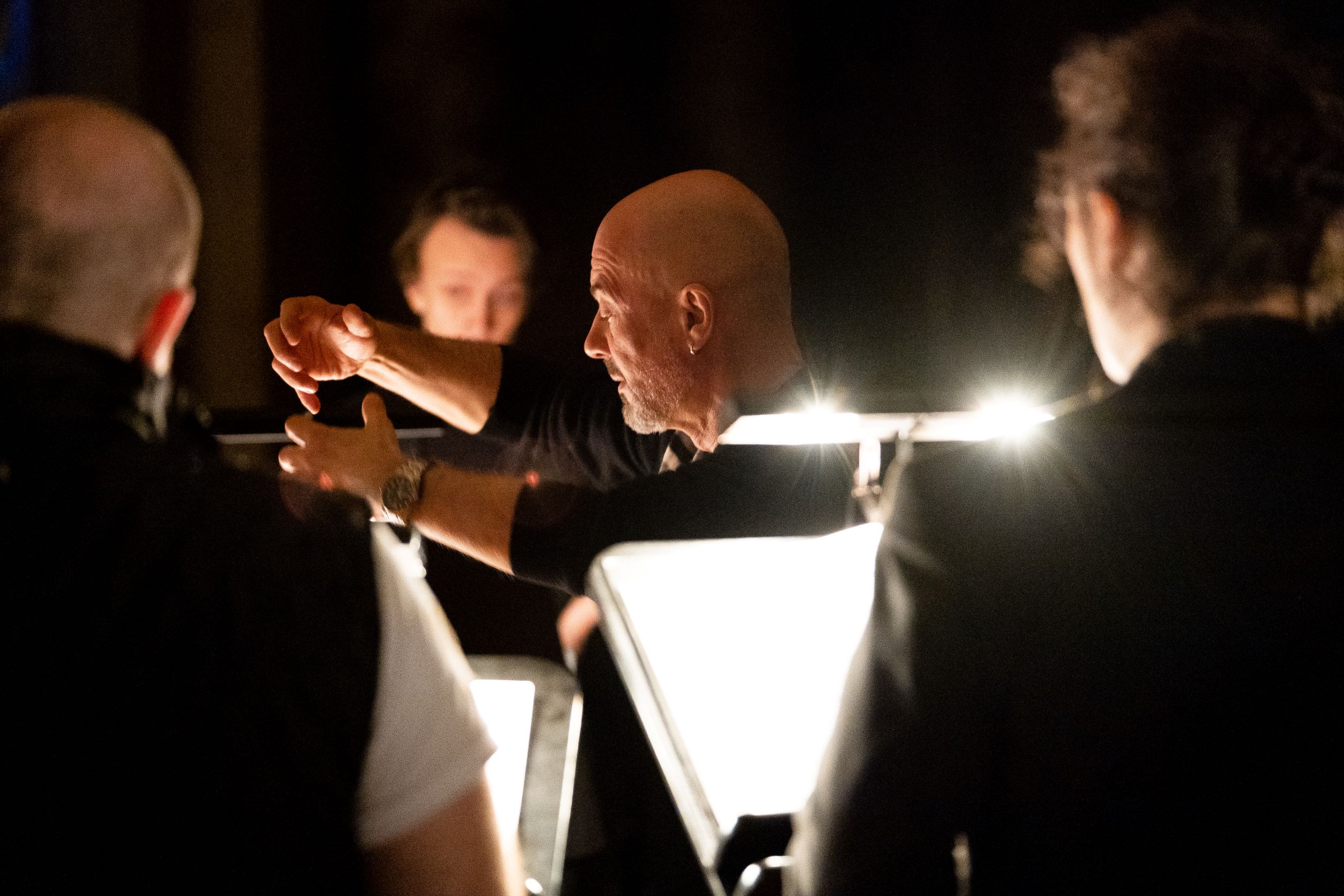
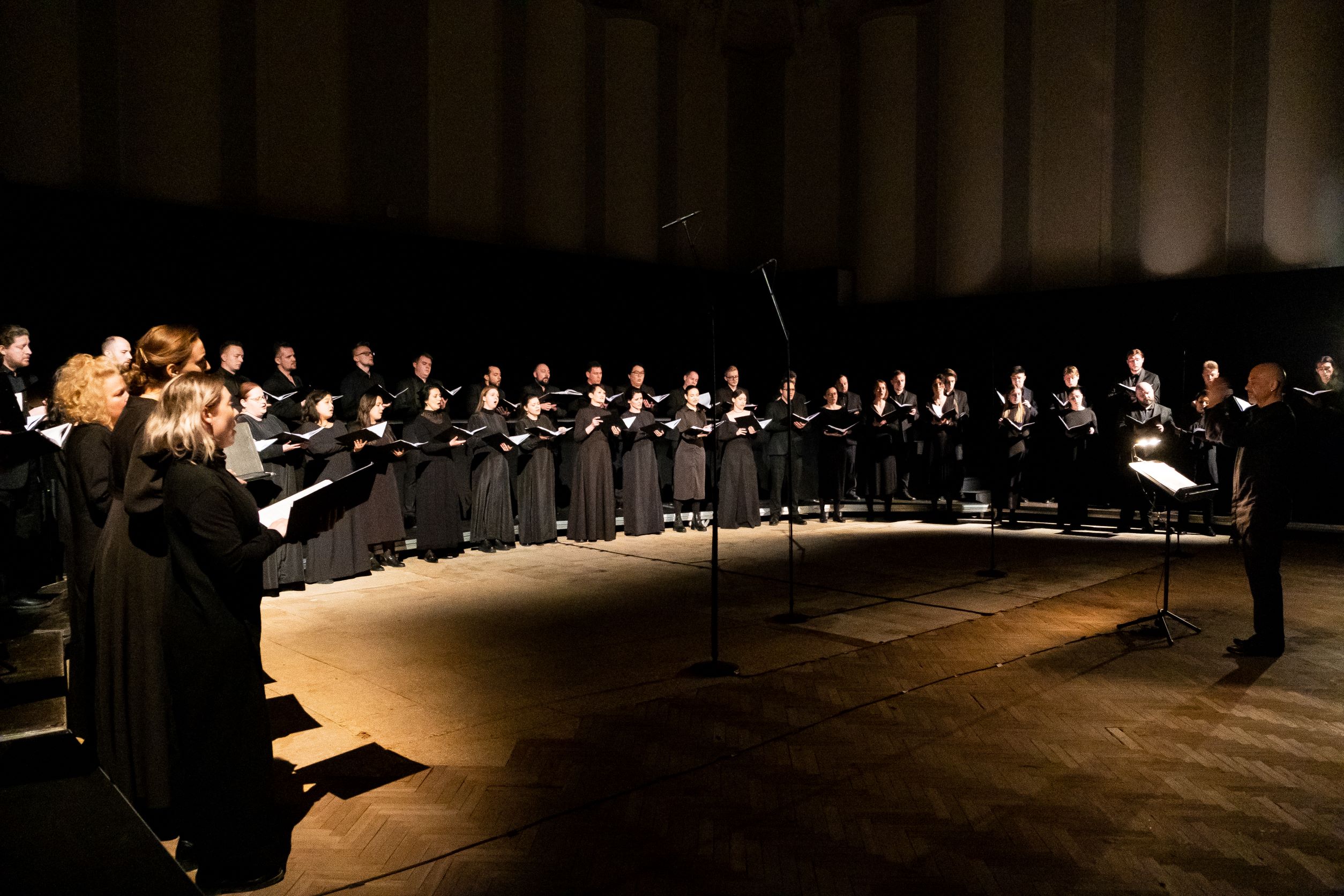
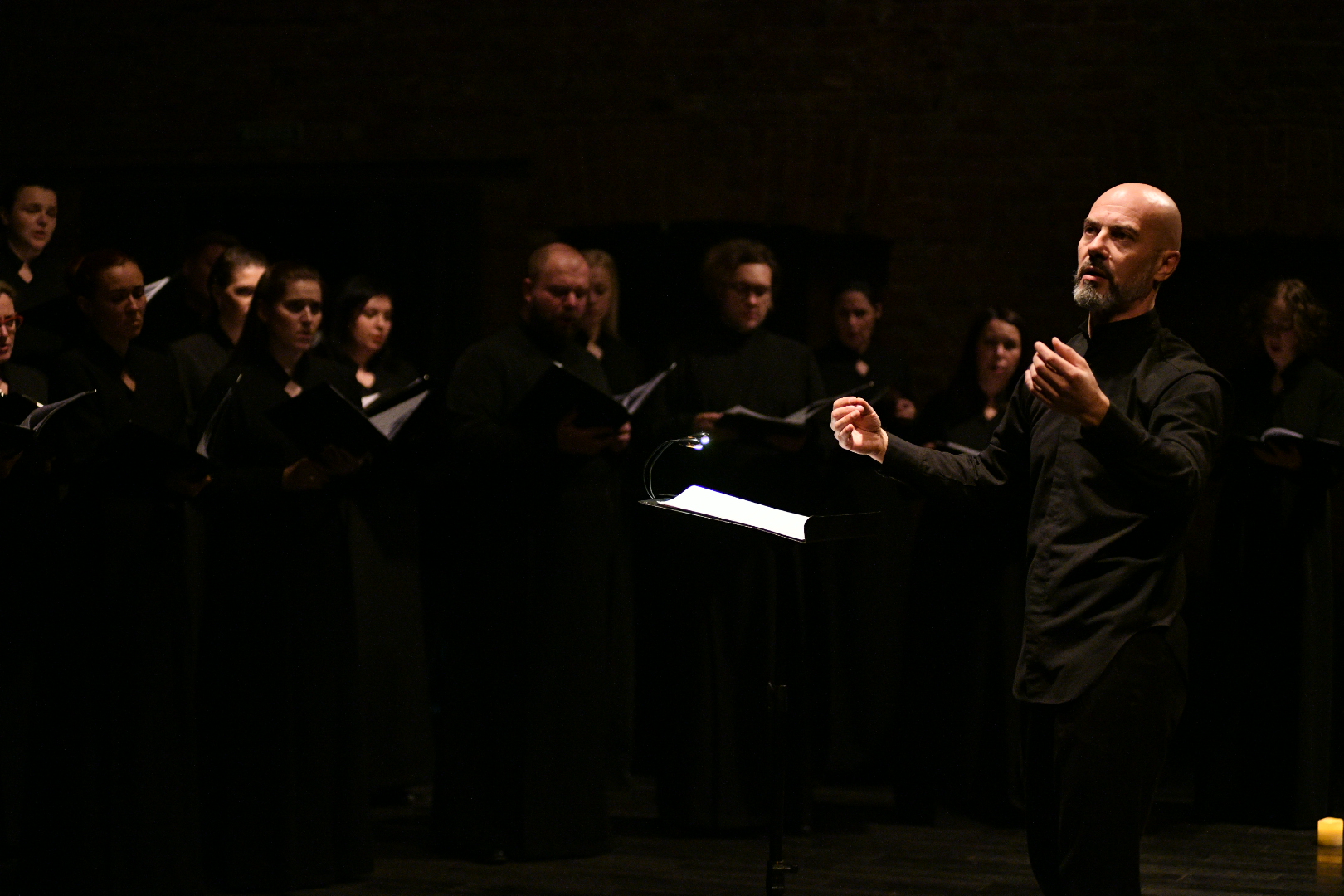
Vitaly Polonsky
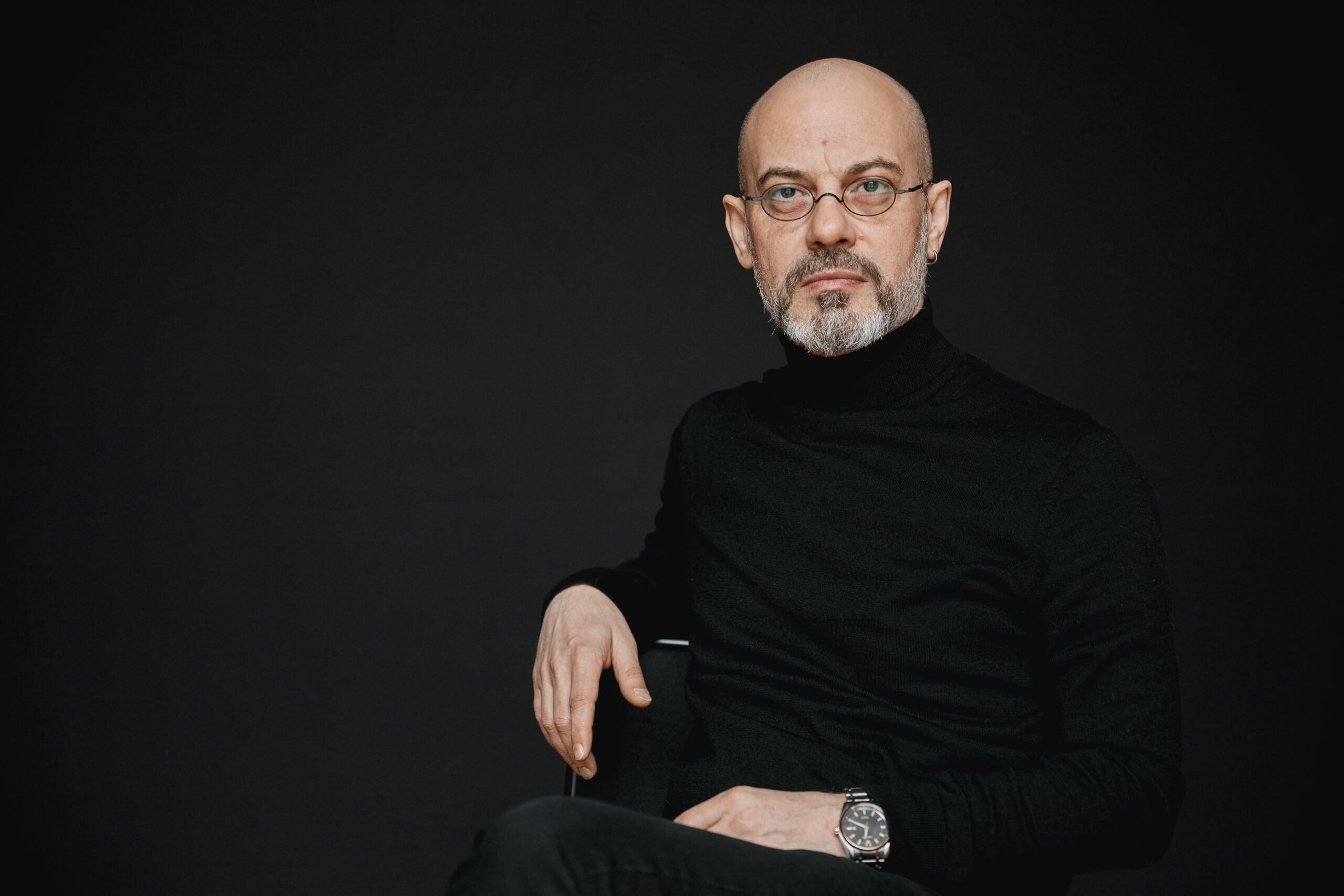
Vitaly Polonsky is principal chorus master of the musicAeterna Choir. A graduate of the Glinka Conservatory in Novosibirsk, he has been working with Teodor Currentzis since 2003.
Vitaly Polonsky works with a repertoire that includes music of different styles and epochs — works by Baroque composers, masterpieces of Russian choral music of the 18th–20th centuries, as well as opera repertoire and works by contemporary authors.
Sopranos
Altos
Tenors
Basses
musicAeterna choir events
György Kurtág (b. 1926)
Songs of Despair and Sorrow for mixed choir with instrumental accompaniment, Op. 18 (1980–1994)
So weary, so wretched to the words of Mikhail Lermontov (1840)
Night, an empty street, a lamp, a drug-store to the words of Alexander Blok (1912)
Blue Evening to the words of Sergei Yesenin (1925)
Where can I go to in this January? to the words of Osip Mandelstam (1937)
The Crucifixion to the words of Anna Akhmatova (1939)
It’s time to the words of Marina Tsvetaeva (1941)
Grabstein für Stephan | Gravestone for Stephan for guitar and instrumental ensemble, Op. 15c
(1989)
Johannes Brahms (1833–1897)
Ein deutsches Requiem | A German Requiem for soprano, baritone, choir and orchestra, Op. 45 (1865–1869)
Selig sind, die da Leid tragen | Blessed are those who weep, for they will be comforted
Denn alles Fleisch, es ist wie Gras | For all flesh is like grass
Herr, lehre doch mich, dass ein Ende mit mir haben muss | Lord, teach me that I must have an end
Wie lieblich sind Deine Wohnungen, Herr Zebaoth! | How lovely is Thy dwelling place, O Lord of hosts!
Ihr habt nun Traurigkeit | Ye now therefore have sorrow
Denn wir haben hier keine bleibende Statt | For here we have no continuing city
Selig sind die Toten, die in dem Herrn sterben | Blessed are the dead who die in the Lord
The programme is subject to change.
Performers:
Iveta Simonyan — soprano
Vladislav Chizhov — baritone
The musicAeterna Choir and Orchestra
Conductor — Teodor Currentzis
György Kurtág (b. 1926)
Songs of Despair and Sorrow for mixed choir with instrumental accompaniment, Op. 18 (1980–1994)
So weary, so wretched to the words of Mikhail Lermontov (1840)
Night, an empty street, a lamp, a drug-store to the words of Alexander Blok (1912)
Blue Evening to the words of Sergei Yesenin (1925)
Where can I go to in this January? to the words of Osip Mandelstam (1937)
The Crucifixion to the words of Anna Akhmatova (1939)
It’s time to the words of Marina Tsvetaeva (1941)
Grabstein für Stephan | Gravestone for Stephan for guitar and instrumental ensemble, Op. 15c
(1989)
Johannes Brahms (1833–1897)
Ein deutsches Requiem | A German Requiem for soprano, baritone, choir and orchestra, Op. 45 (1865–1869)
Selig sind, die da Leid tragen | Blessed are those who weep, for they will be comforted
Denn alles Fleisch, es ist wie Gras | For all flesh is like grass
Herr, lehre doch mich, dass ein Ende mit mir haben muss | Lord, teach me that I must have an end
Wie lieblich sind Deine Wohnungen, Herr Zebaoth! | How lovely is Thy dwelling place, O Lord of hosts!
Ihr habt nun Traurigkeit | Ye now therefore have sorrow
Denn wir haben hier keine bleibende Statt | For here we have no continuing city
Selig sind die Toten, die in dem Herrn sterben | Blessed are the dead who die in the Lord
The programme is subject to change.
Performers:
Iveta Simonyan — soprano
Vladislav Chizhov — baritone
The musicAeterna Choir and Orchestra
Conductor — Teodor Currentzis
György Kurtág (b. 1926)
Songs of Despair and Sorrow for mixed choir with instrumental accompaniment, Op. 18 (1980–1994)
So weary, so wretched to the words of Mikhail Lermontov (1840)
Night, an empty street, a lamp, a drug-store to the words of Alexander Blok (1912)
Blue Evening to the words of Sergei Yesenin (1925)
Where can I go to in this January? to the words of Osip Mandelstam (1937)
The Crucifixion to the words of Anna Akhmatova (1939)
It’s time to the words of Marina Tsvetaeva (1941)
Grabstein für Stephan | Gravestone for Stephan for guitar and instrumental ensemble, Op. 15c
(1989)
Johannes Brahms (1833–1897)
Ein deutsches Requiem | A German Requiem for soprano, baritone, choir and orchestra, Op. 45 (1865–1869)
Selig sind, die da Leid tragen | Blessed are those who weep, for they will be comforted
Denn alles Fleisch, es ist wie Gras | For all flesh is like grass
Herr, lehre doch mich, dass ein Ende mit mir haben muss | Lord, teach me that I must have an end
Wie lieblich sind Deine Wohnungen, Herr Zebaoth! | How lovely is Thy dwelling place, O Lord of hosts!
Ihr habt nun Traurigkeit | Ye now therefore have sorrow
Denn wir haben hier keine bleibende Statt | For here we have no continuing city
Selig sind die Toten, die in dem Herrn sterben | Blessed are the dead who die in the Lord
The programme is subject to change.
Performers:
Iveta Simonyan — soprano
Vladislav Chizhov — baritone
The musicAeterna Choir and Orchestra
Conductor — Teodor Currentzis
Jean-Philippe Rameau (1683–1764)
Vocal and orchestral numbers from the works:
Les Indes galantes (1735), an opera-ballet
Castor et Pollux (1737), a lyrical tragedy
Les fêtes d’Hébé, ou Les talens lyriques (1739), an opera-ballet
Platée ou Junon jalouse (1745), a lyrical comedy
Zaïs (1748), a heroic pastoral
Zoroastre (1749), a lyrical tragedy
Abaris ou les Boréades (1763–1764), a lyrical tragedy
The programme is subject to change.
Performers:
The musicAeterna Orchestra and Choir
Artists of the Anton Rubinstein Academy
Musical Director and Conductor – Teodor Currentzis
Jean-Philippe Rameau (1683–1764)
Vocal and orchestral numbers from the works:
Les Indes galantes (1735), an opera-ballet
Castor et Pollux (1737), a lyrical tragedy
Les fêtes d’Hébé, ou Les talens lyriques (1739), an opera-ballet
Platée ou Junon jalouse (1745), a lyrical comedy
Zaïs (1748), a heroic pastoral
Zoroastre (1749), a lyrical tragedy
Abaris ou les Boréades (1763–1764), a lyrical tragedy
The programme is subject to change.
Performers:
The musicAeterna Orchestra and Choir
Artists of the Anton Rubinstein Academy
Musical Director and Conductor – Teodor Currentzis